Oleshky humanitarian mission: How Melania Trump's mediation changed Ukrainians' attitudes toward the US, why 93.6% supported the operation, and how they assessed Lubinets' participation

Active Group, commissioned by the Ukrainian media outlet Politarena, conducted a sociological survey on the humanitarian mission in Russian-occupied Oleshky, Kherson region. The study examined public support for the mission, international mediation by US First Lady Melania Trump, and the personal participation of Ukraine's Parliamentary Commissioner for Human Rights, Dmytro Lubinets.
Methodology: The survey was conducted on October 31, 2026, using the SunFlower Sociology online panel. The sample comprised 1,000 respondents, with a reported margin of error of ±3.1 percentage points. The sample represents Ukraine's adult population, excluding temporarily occupied territories.
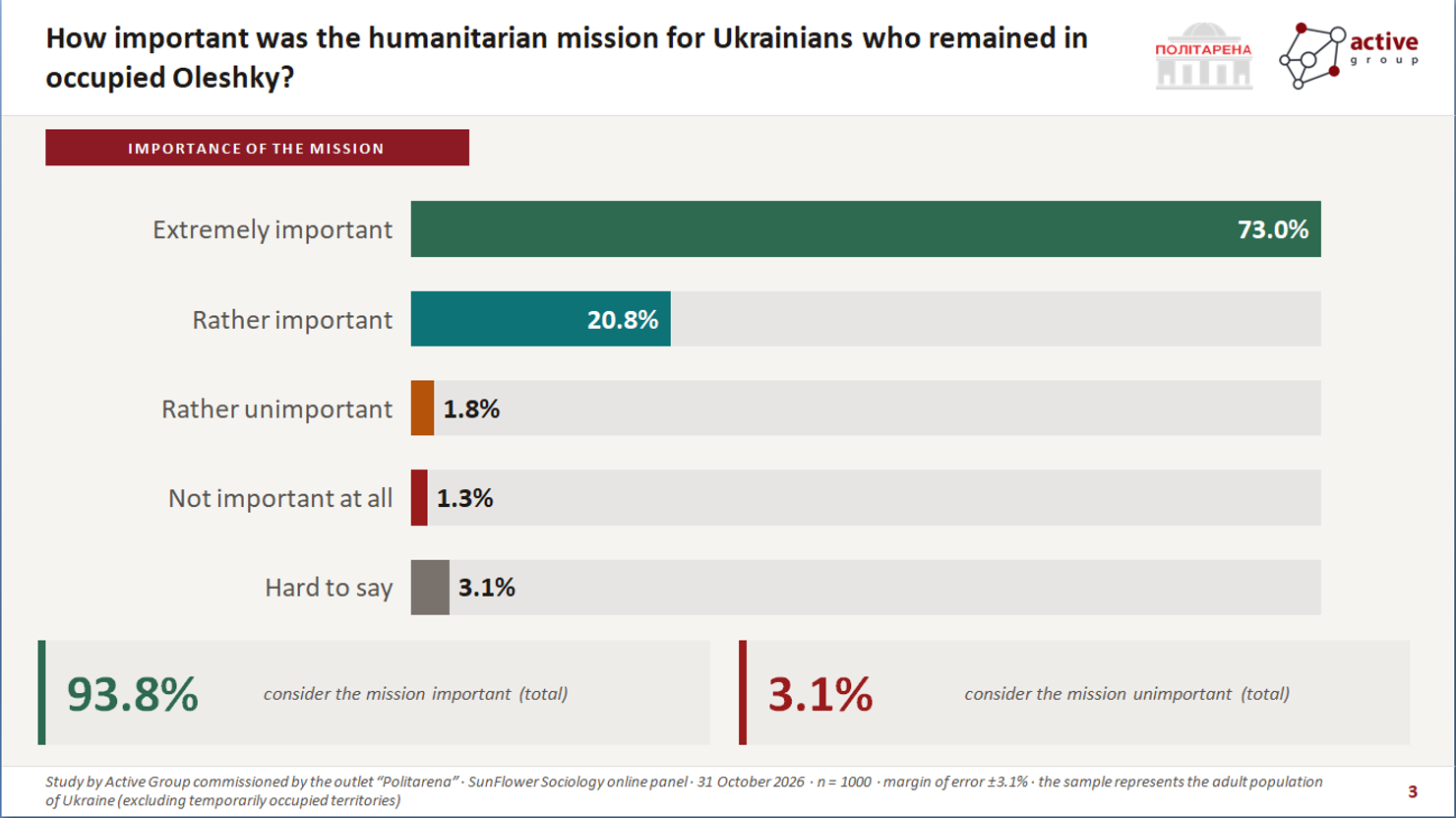
93.8% of Ukrainians consider the humanitarian mission in Oleshky important for their fellow citizens who remained under occupation. Only 3.1% consider the mission unimportant.
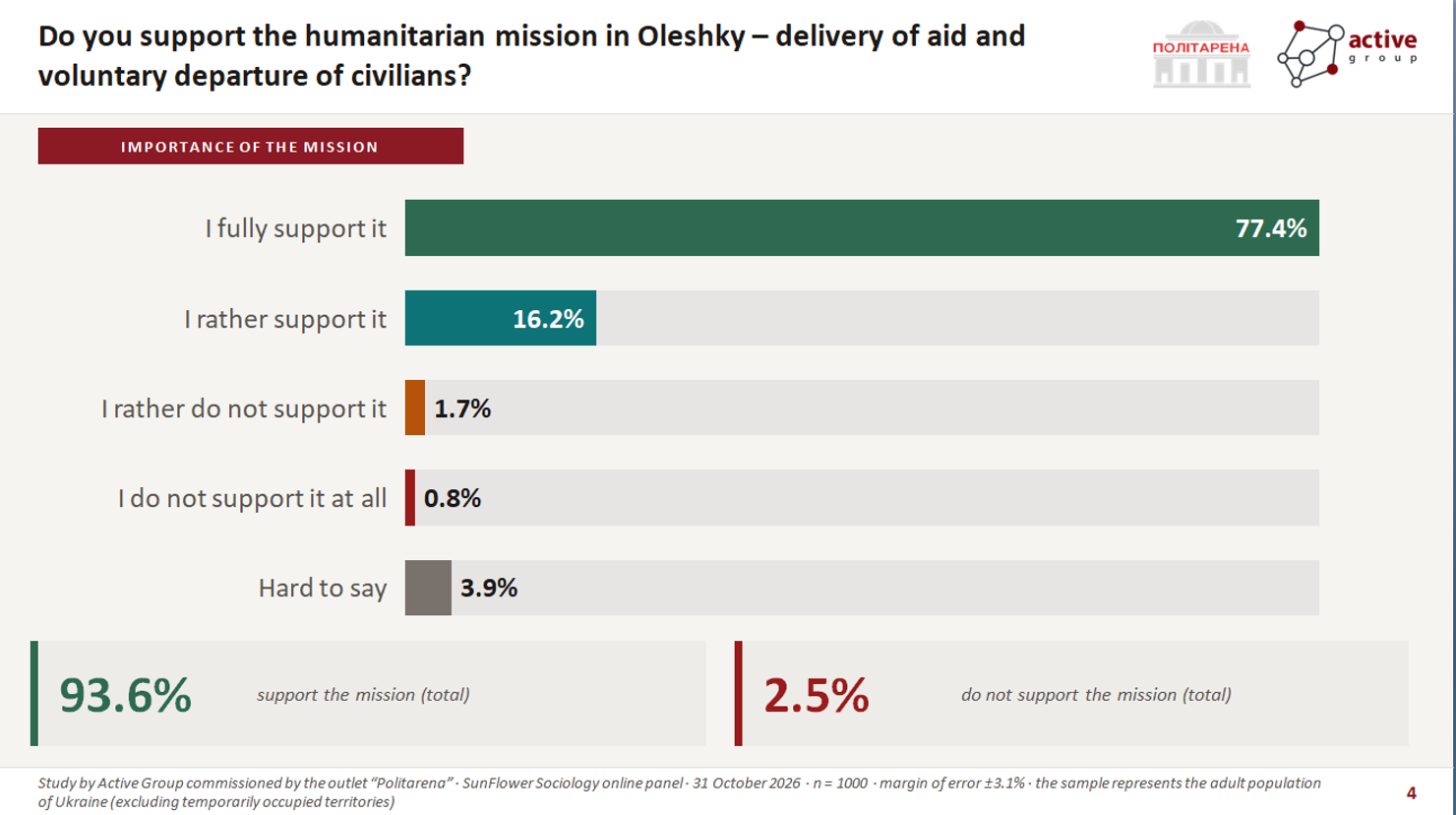
Overall, 93.6% of respondents support the humanitarian mission in Oleshky, while 2.5% do not support it.
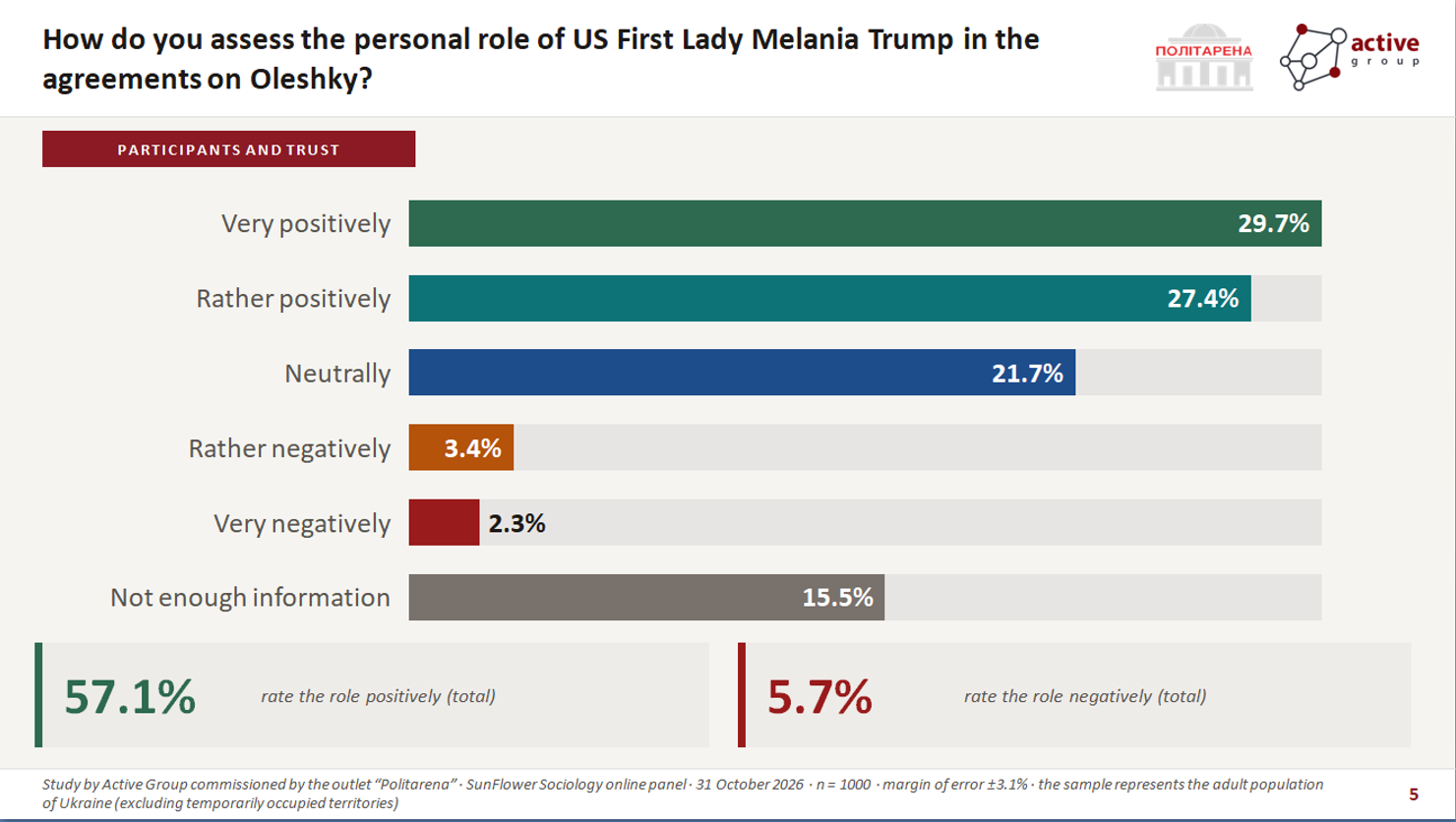
Melania Trump's role received positive assessments from 57.1% of respondents. Of these, 29.7% assessed her role very positively, while 27.4% assessed it rather positively. A total of 5.7% assessed her role negatively, and 21.7% expressed a neutral opinion.
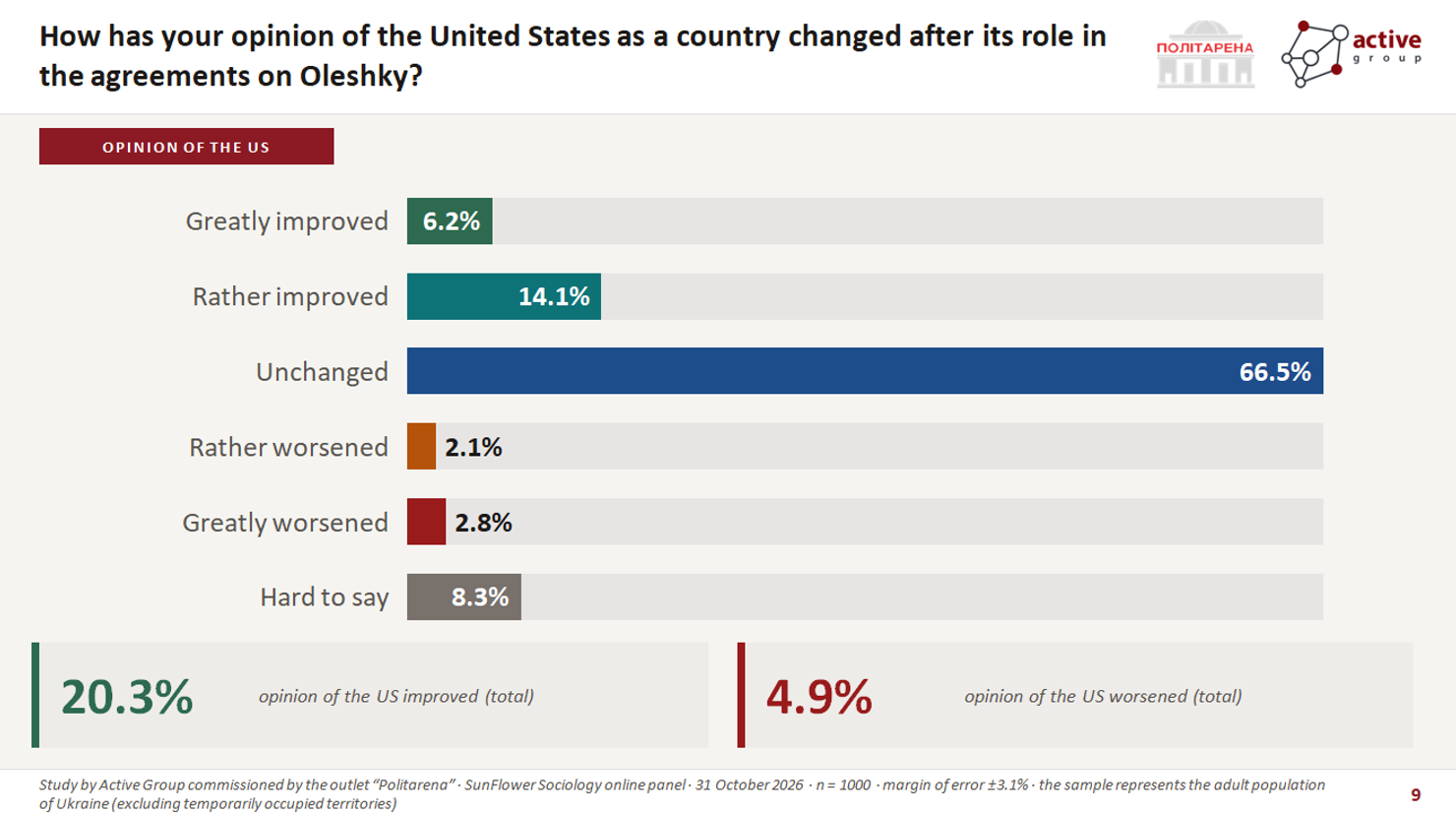
20.3% of Ukrainians reported that their attitude toward the United States had improved. Specifically, 14.1% said their opinion of the US had somewhat improved, while 6.2% reported a significant improvement.
A combined 4.9% reported a deterioration in their opinion of the US. Meanwhile, 66.5% said their attitude toward the United States had remained unchanged following the country's role in the agreements concerning the evacuation of Oleshky residents.
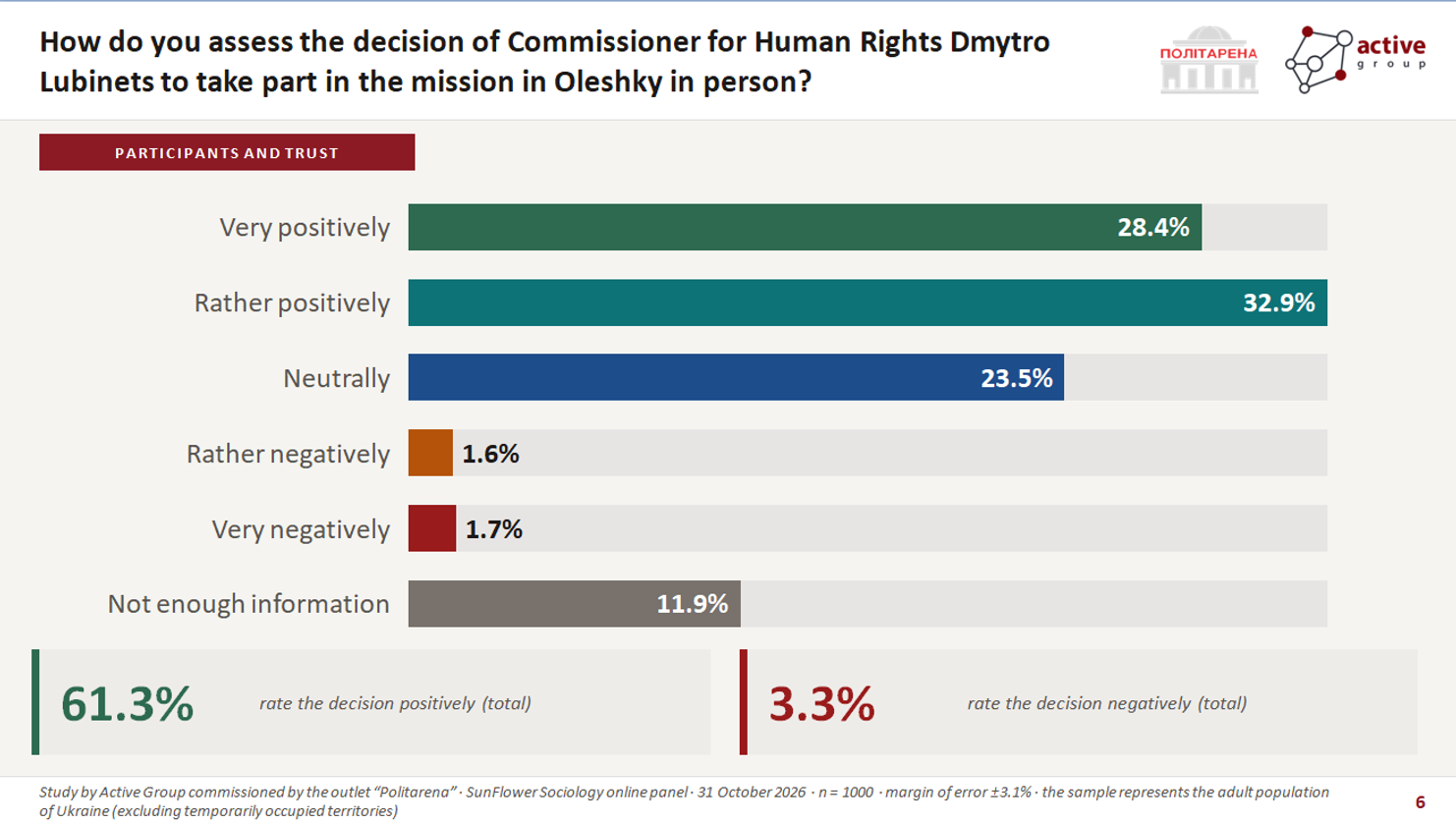
Regarding Ukrainian Ombudsman Dmytro Lubinets, 61.3% of respondents positively assessed his decision to participate personally in the mission. Another 23.5% expressed a neutral opinion, while 3.3% assessed the decision negatively.
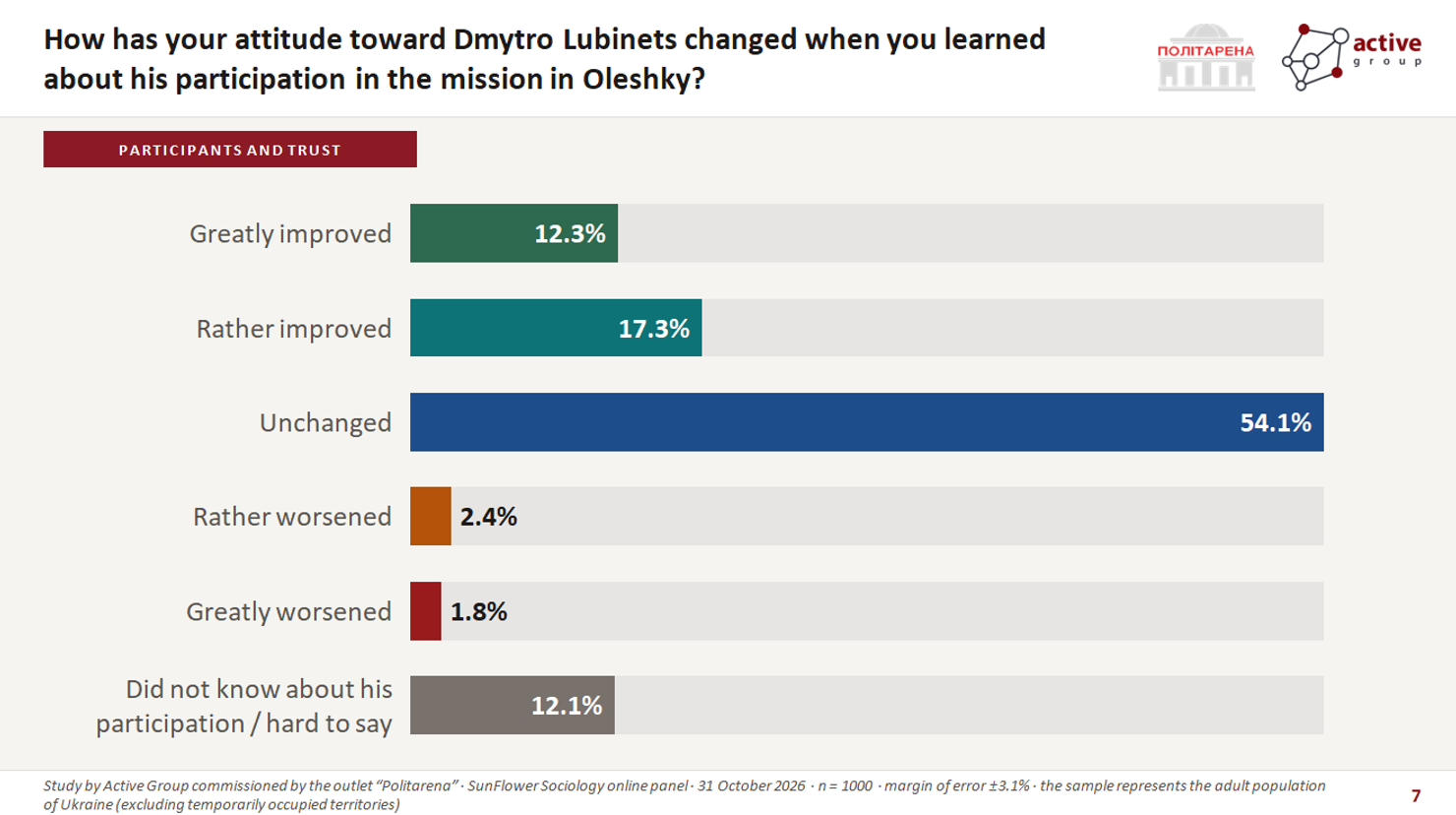
Attitudes toward Lubinets improved significantly among 12.3% of respondents following his participation in the Oleshky mission, while another 17.3% reported a somewhat more positive attitude.
Only 1.8% reported a significant deterioration in their attitude toward him, while 2.4% said it had somewhat worsened.
A further 12.1% either had not known about his participation or found it difficult to answer. The majority, 54.1%, said their attitude toward Lubinets had remained unchanged.
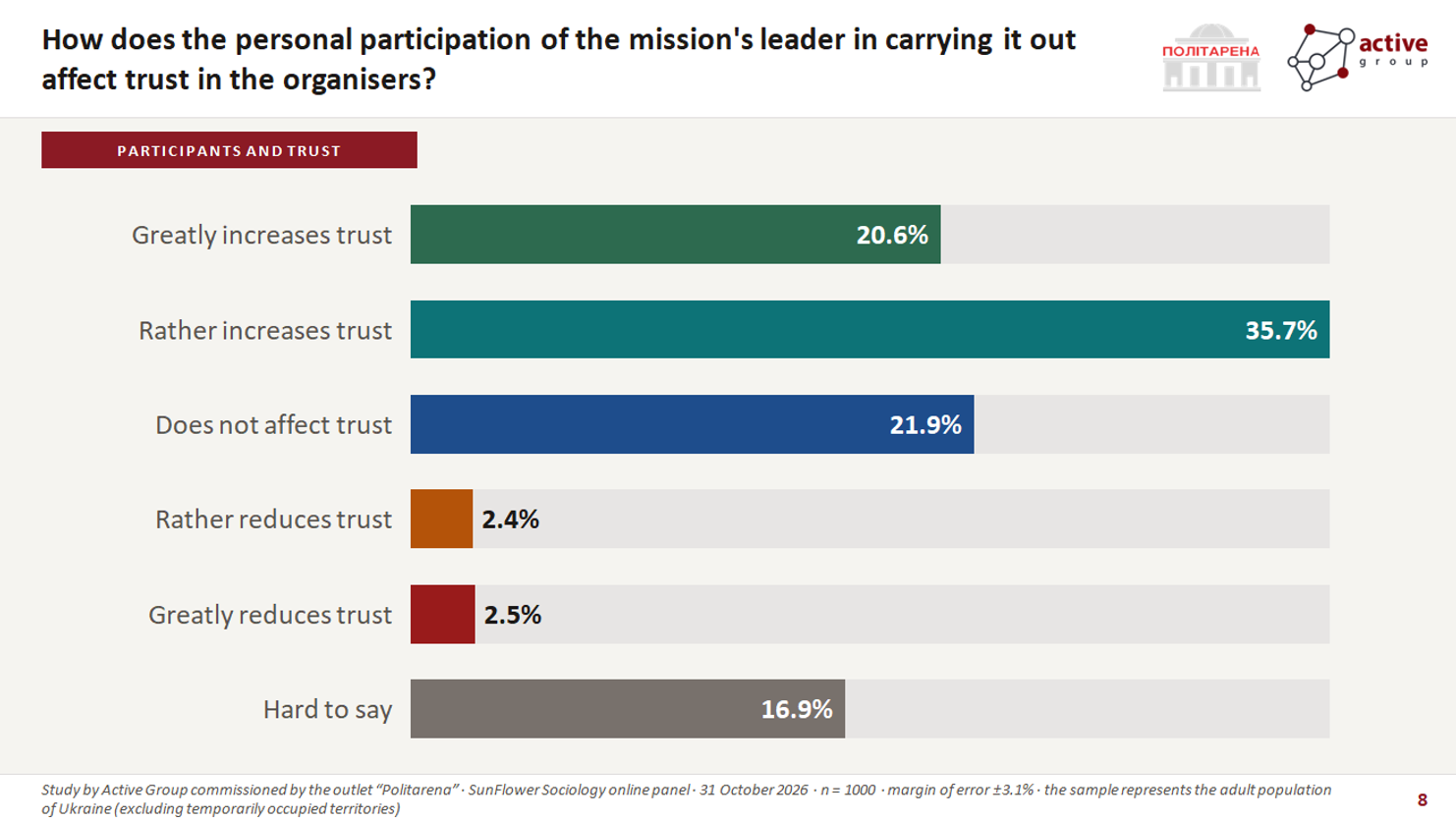
20.6% of respondents believe that the personal participation of a mission leader, such as Lubinets, in carrying out the operation significantly increases trust in its organizers. Another 35.7% said such participation somewhat increases trust.
Meanwhile, 21.9% believe that the leader's participation does not affect trust in the organizers. A combined 4.9% said it reduces trust.
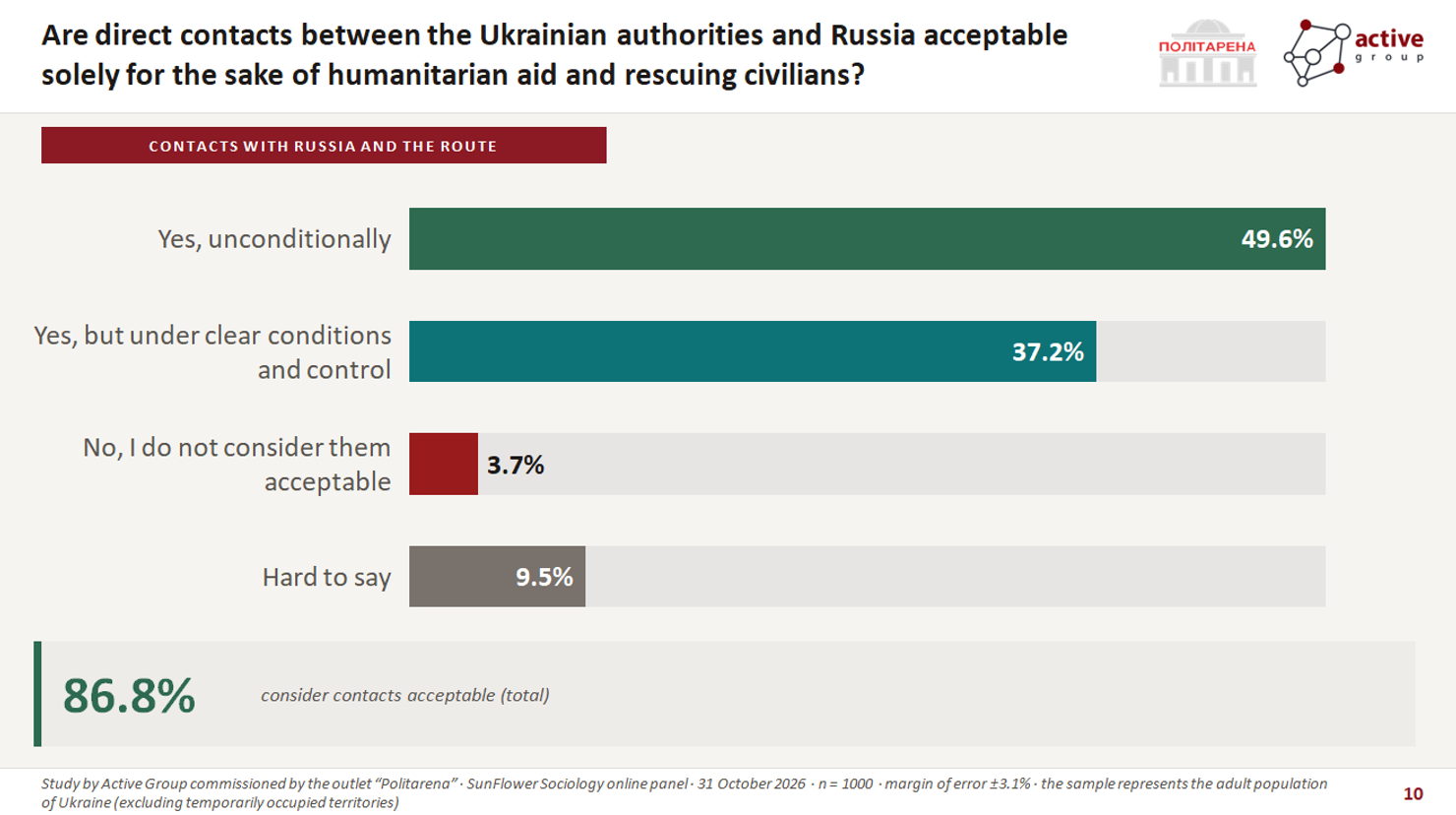
Asked whether direct contacts between Ukrainian authorities and Russia are acceptable for the purpose of providing humanitarian assistance, 49.6% said such contacts are unconditionally acceptable.
Another 37.2% consider them acceptable, but only under clear conditions and oversight. Just 3.7% oppose such contacts with Russia.
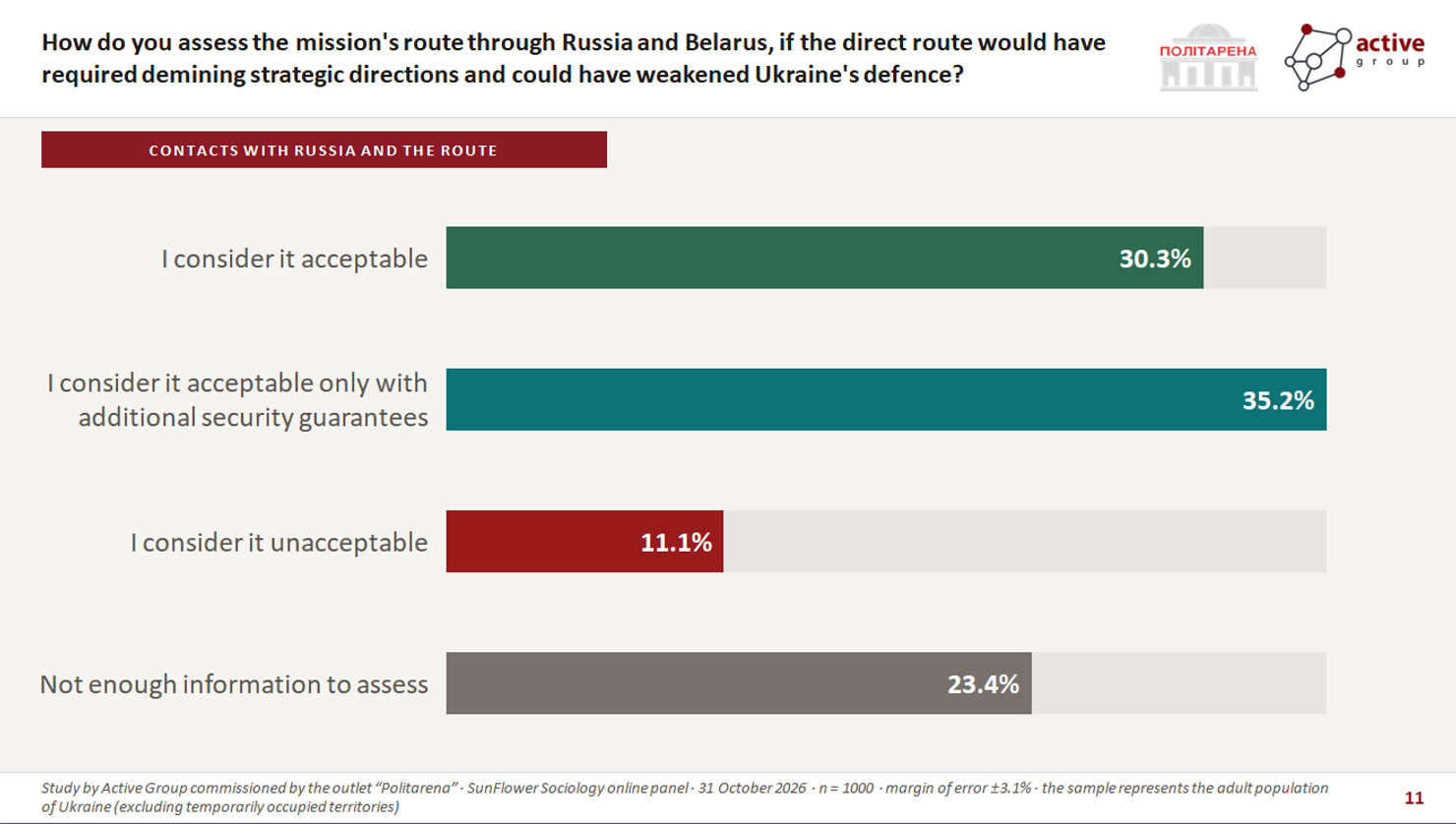
30.3% of Ukrainians consider the humanitarian mission's route acceptable, while 35.2% consider it acceptable only with additional security guarantees.
Another 11.1% consider the route through Russia and Belarus unacceptable. Meanwhile, 23.4% said they did not have sufficient information to assess it.
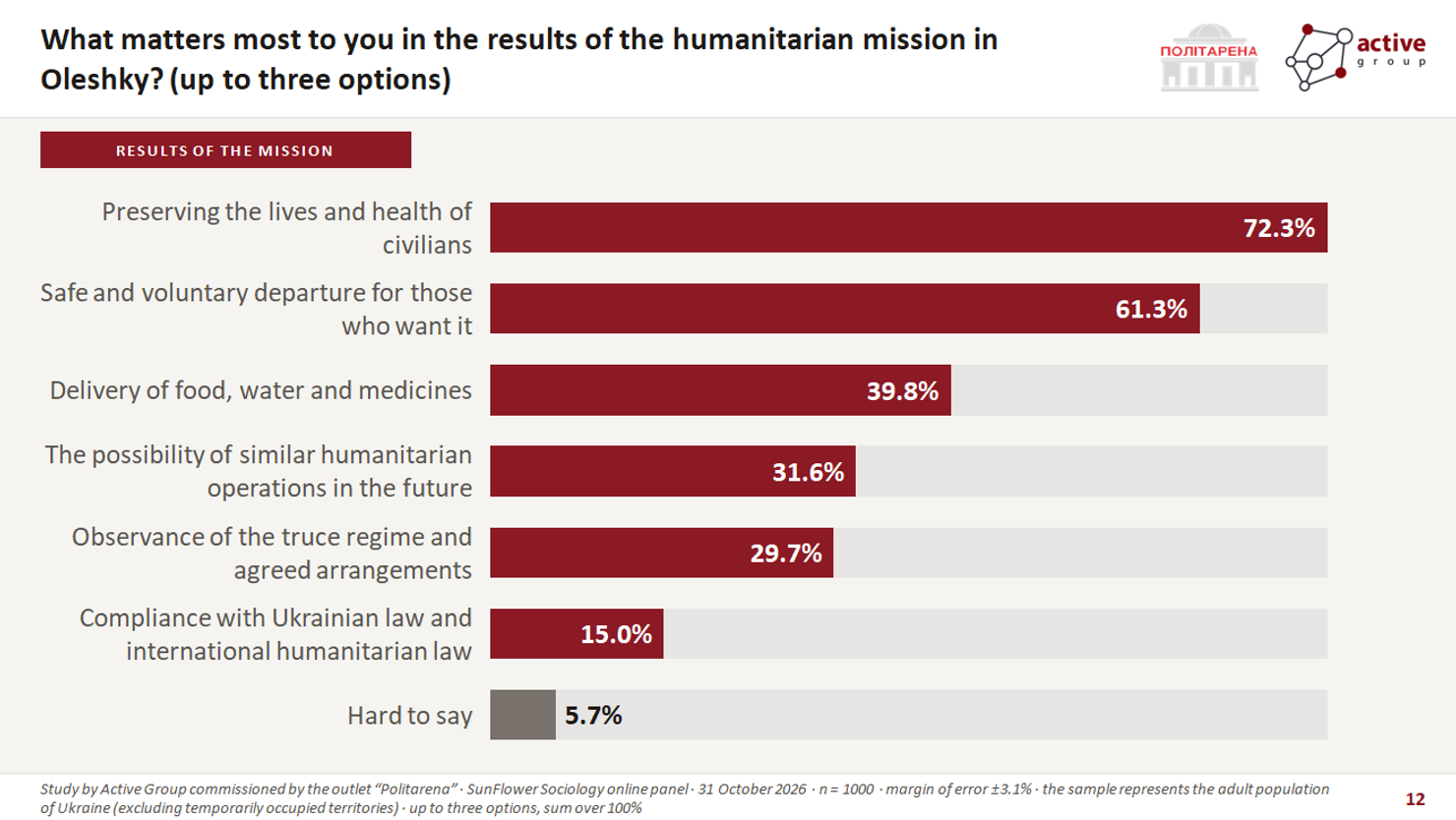
Preserving the lives and health of civilians was identified by 72.3% of respondents as the most important outcome of the humanitarian mission in Oleshky.
Another 61.3% named safe and voluntary departure as a key priority, while 39.8% highlighted the delivery of food, water, and medicines.
A further 29.7% emphasized compliance with the ceasefire arrangements and agreed commitments, while 15% identified compliance with Ukrainian legislation and international humanitarian law.
VIDEO: Presentation of the survey results.
Читайте також